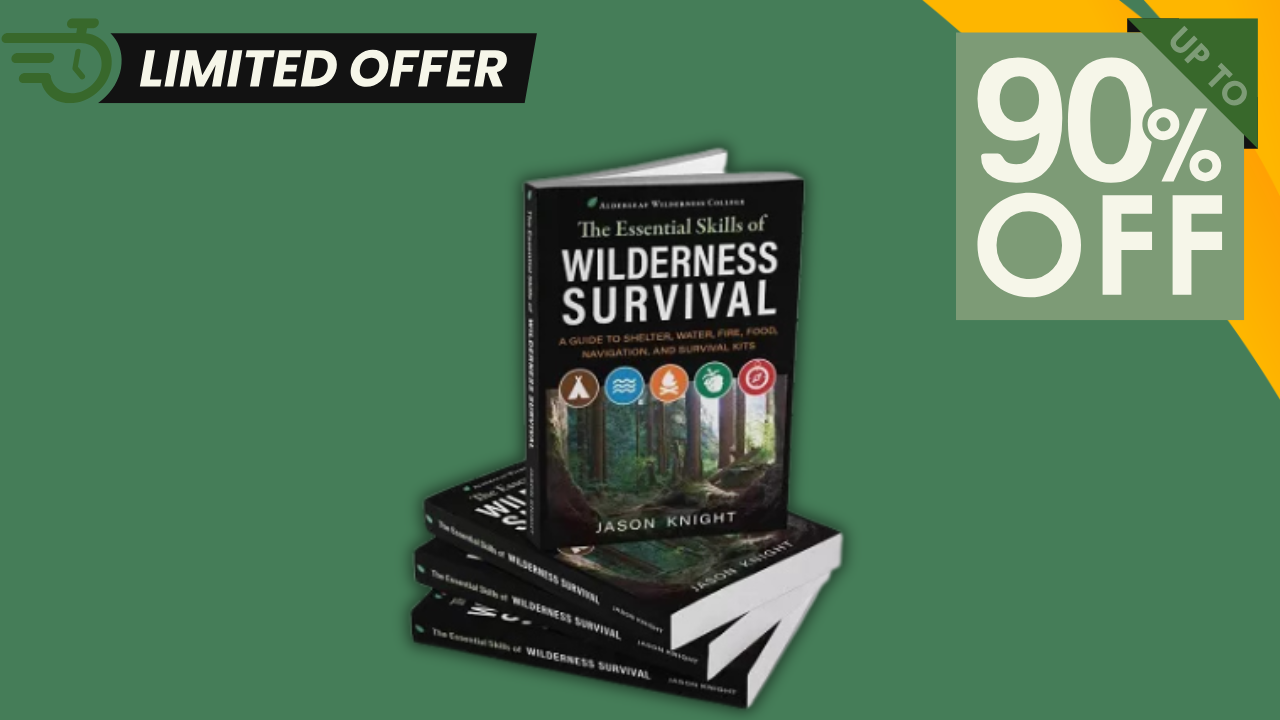
Wilderness Survival Review 2026
Wilderness Survival Review 2026: Why Dumb Survival Advice Travels Faster Than Common Sense
Let me say something slightly rude but painfully true.
Bad advice spreads online like wildfire in dry Arizona grass.
One guy posts a survival “hack” on TikTok… maybe wearing tactical gloves and whispering like he discovered secret Viking bushcraft knowledge… and suddenly half the internet repeats it.
No testing.
No thinking.
Just confidence and dramatic background music.
Search “The Essential Skills of Wilderness Survival emergencies reviews USA” and you’ll see this chaos unfold. Some people praise the book. Others nitpick it. And a handful repeat survival myths that sound like they came straight out of a Hollywood movie from the 1980s.
Which is funny — or maybe depressing — because the United States wilderness doesn’t care about Hollywood logic.
A forest in Washington State doesn’t care if you watched a survival show.
A desert in Arizona definitely doesn’t care.
And a sudden snowstorm in Colorado… yeah, that one especially doesn’t care.
Nature runs on physics, weather, and occasionally a little cruelty.
That’s why survival guides like The Essential Skills of Wilderness Survival exist. They strip away the nonsense — the dramatic tricks, the viral myths — and focus on practical knowledge.
Not glamorous knowledge.
But knowledge that works.
And today we’re going to dissect some of the worst survival advice still floating around the United States in 2026. Some of it is hilarious. Some of it is annoying. A few pieces are dangerously wrong.
Let’s tear them apart.
| Feature | Details |
|---|---|
| Product Name | The Essential Skills of Wilderness Survival |
| Author | Jason Knight |
| Type | Wilderness survival guide |
| Purpose | Teach practical survival skills for outdoor emergencies |
| Main Claims in Reviews | “Highly recommended”, “Reliable”, “No scam”, “100% legit” |
| Pricing Range | ~$11.99 (eBook) – ~$27.99 (Paperback) |
| Refund Terms | 60-Day Money Back Guarantee |
| Authenticity Tip | Buy only from official sellers to avoid fake copies |
| USA Relevance | Popular among hikers, campers, and outdoor lovers across the United States |
| Risk Factor | Some critics say it’s “too basic” — though beginners love that |
Terrible Advice #1: “Just Follow Moss on Trees to Find North”
Ah yes. The moss myth.
If you ever went camping in the United States as a kid — maybe somewhere in Tennessee, Oregon, or Michigan — someone probably told you this.
“Look at the moss. It grows on the north side of trees.”
It sounds poetic, almost mystical. Like the forest itself quietly guiding travelers home. A little Disney-movie energy mixed with old scout lore.
But here’s the awkward truth.
Moss grows wherever moisture and shade exist.
Which means moss can appear on the north side… the south side… the east side… or the entire tree like it’s wearing a fuzzy green sweater.
I discovered this personally while hiking through a wet forest in Oregon a few years ago. Thick fog. The smell of pine needles and damp soil. Every tree looked like it had grown its own moss beard.
North side? South side?
Who knows.
If I had followed that moss rule I would still be wandering around there today, slowly becoming part of the ecosystem.
Jason Knight’s book avoids this romantic nonsense completely. Instead it teaches simple orientation habits:
• noticing terrain changes
• remembering landmarks
• tracking direction while walking
Boring? Maybe.
Effective? Absolutely.
Terrible Advice #2: “Modern Americans Don’t Need Survival Skills”
This myth is popular among people who spend a lot of time indoors.
The argument goes something like this:
“We have GPS now. Smartphones. Satellite maps. Survival skills are outdated.”
Sure.
Until your phone battery drops to 3% somewhere deep in Yellowstone National Park.
Or until you wander far enough into the forests of Washington State that cell signal disappears like a magician’s trick.
The United States is enormous. Seriously enormous. There are millions of acres where technology suddenly becomes less helpful than you’d expect.
Search-and-rescue teams across the USA respond to thousands of lost-hiker calls every year.
Many of those hikers had phones.
Phones help.
But phones fail.
Cold weather drains batteries faster. GPS apps glitch. Storms roll in unexpectedly. Suddenly that digital safety net develops holes.
That’s why survival instructors emphasize knowledge first, gear second.
The Essential Skills of Wilderness Survival teaches a simple hierarchy:
Shelter first.
Water second.
Fire third.
Food later.
It’s not flashy advice — which might be why it works.
Terrible Advice #3: “Mountain Streams Are Always Safe to Drink”
This myth survives because mountain water looks beautiful.
Clear water rushing over rocks. Sunlight reflecting in bright sparkles. It practically whispers “drink me.”
But streams across the United States can contain microscopic troublemakers like Giardia.
Tiny parasites. Big consequences.
I once met a backpacker in Utah who proudly told me he never filters water because “nature is pure.” He seemed very confident.
Two days later he looked like a man who deeply regretted his life philosophy.
Water purification is a key section of The Essential Skills of Wilderness Survival. The guide explains practical techniques for:
• locating water sources
• filtering or boiling water
• avoiding contamination
Hydration keeps you alive.
But safe hydration keeps you comfortable — and dignity matters more than people admit.
Terrible Advice #4: “Food Is the First Thing You Need in Survival”
Television survival shows love this myth.
Contestants immediately start hunting frogs or gathering mysterious berries while dramatic music plays in the background.
But food usually isn’t the first survival priority.
Humans can survive weeks without food.
Shelter and water matter much sooner.
Outdoor instructors across the United States often teach the “Rule of Threes”:
3 hours without shelter in harsh weather
3 days without water
3 weeks without food
Notice the order.
Yet beginners obsess over edible plants while ignoring shelter construction.
That’s like decorating a house before building the walls.
Jason Knight’s book gently but firmly resets those priorities.
Stay warm.
Stay hydrated.
Then worry about calories.
Terrible Advice #5: “You’ll Figure It Out When the Time Comes”
This advice sounds heroic.
It’s the survival version of saying “I’ll wing it.”
But real emergencies don’t work that way.
Stress affects thinking. People panic. They forget simple things. Decision-making becomes chaotic — like trying to solve math problems while someone bangs cymbals next to your head.
Preparation changes that.
Even basic knowledge gives your brain a roadmap during stressful moments.
Shelter.
Water.
Fire.
Signal.
Jason Knight has been teaching wilderness survival across the United States since the late 1990s. Thousands of students, countless training courses. And one lesson appears again and again:
Prepared people make calmer decisions.
Calm decisions improve survival odds.
Simple chain reaction.
Why This Book Became Popular in the USA Outdoor Community
Despite occasional complaints — which every survival book receives — The Essential Skills of Wilderness Survival has earned strong reviews among American hikers and campers.
The reasons are pretty straightforward.
Clarity.
Experience.
Practicality.
Jason Knight has spent decades teaching survival skills through Alderleaf Wilderness College. His teaching style shows in the book — instructions are organized, illustrated, and surprisingly approachable.
Some advanced survival enthusiasts wish the book contained deeper bushcraft techniques. That’s fair criticism.
But beginners benefit from strong foundations before attempting advanced survival skills.
You don’t start mountain climbing on Everest.
You start with the basics.
Filter the Noise
The internet will always produce survival myths.
Some are harmless.
Some are hilarious.
And a few are genuinely dangerous.
But wilderness survival isn’t about viral tricks or dramatic storytelling. It’s about understanding simple priorities and staying calm when conditions change.
The United States contains some of the most beautiful wilderness on Earth — forests in Washington, deserts in Arizona, mountains in Colorado.
Exploring those places is incredible.
Exploring them with knowledge is even better.
So ignore the nonsense.
Learn practical skills.
And remember that confidence might feel powerful… but preparation is far more reliable.
FAQs About The Essential Skills of Wilderness Survival
1. Is The Essential Skills of Wilderness Survival legit or a scam?
It’s legitimate. The book was written by Jason Knight, a well-known survival instructor in the United States, and it receives strong reviews from outdoor enthusiasts.
2. Is the book beginner friendly?
Yes. The guide focuses on clear explanations and practical skills, making it ideal for beginners interested in wilderness preparedness.
3. Are there complaints about the book?
Some experienced survivalists say they wish it included more advanced bushcraft techniques. However, most readers appreciate its simplicity and clear instruction.
4. Can this book actually help in emergencies?
Yes. It teaches survival priorities like shelter, water, and fire — the same fundamentals taught in many outdoor training programs across the USA.
5. Where should I buy it safely?
Always purchase from official vendors or trusted retailers to avoid counterfeit copies and ensure you receive the authentic book and any bonuses.