Rise from depression Reviews

Rise from depression Reviews: Bad advice spreads because it is easy to repeat and weirdly comforting to the person giving it.
That’s the whole trick.
A person says, “just think positive,” and suddenly they feel wise. Another one says, “go outside and stop overthinking,” and now they’re basically a life coach in their own head. In the USA, this kind of advice travels fast because it fits perfectly into a reel, a tweet, a Facebook post, or one of those loud opinion videos where somebody points at floating text and acts like they personally defeated sadness with a protein shake and a sunrise.
But depression does not care about catchy lines. It really doesn’t.
That is why so many people searching Rise from depression Reviews are not just looking for product details. They are trying to figure out whether this is another glossy promise, another overcooked review page, another “I love this product, highly recommended, reliable, no scam, 100% legit” speech written by somebody who sounds suspiciously close to a checkout button.
So let’s do this the less glamorous way. The more useful way.
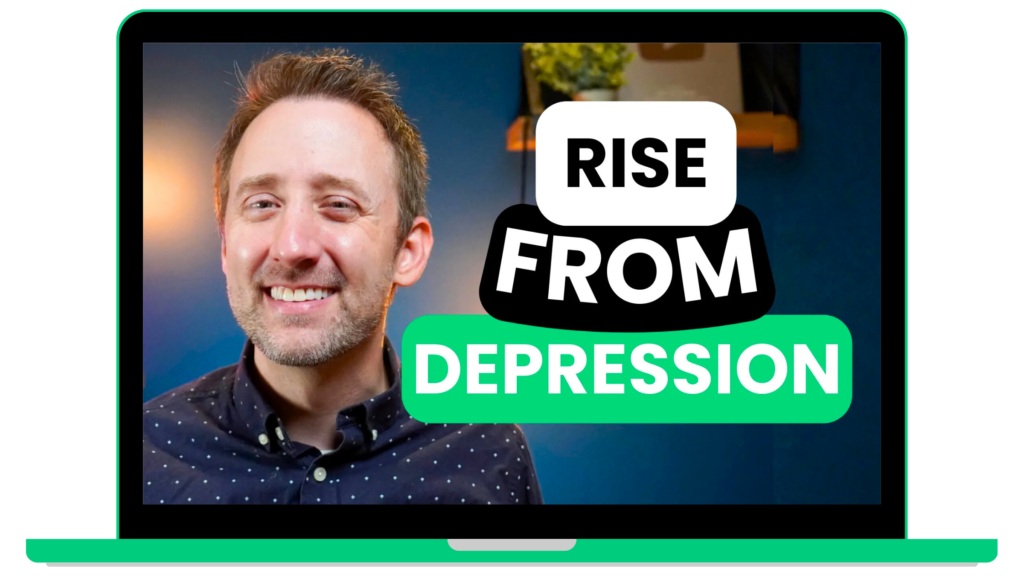
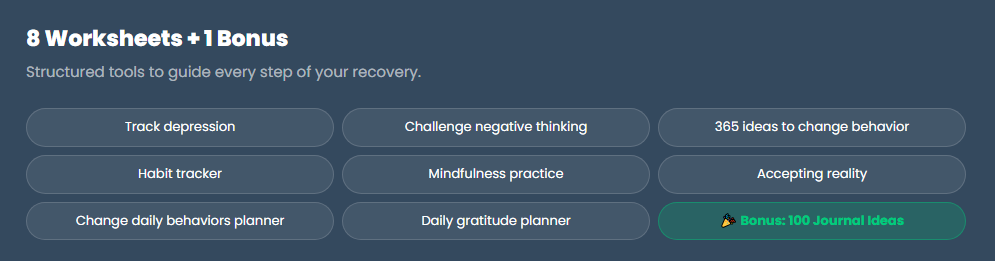
Based on the sales page, Rise From Depression is a self-guided course created by Nathan Peterson, a licensed therapist, built around practical methods like CBT, behavioral activation, mindfulness, and structured worksheets. It includes 13 video lessons, 8 worksheets, bonus journal ideas, lifetime access, and a one-time payment model. The page also says it is not a substitute for therapy, especially for severe depression or crisis situations. That part matters. A lot, actually.
And now for the nonsense.
| Feature | Details |
|---|---|
| Product Name | Rise From Depression |
| Type | Self-guided online depression course |
| Creator | Nathan Peterson, LCSW |
| Main Method | CBT, behavioral activation, mindfulness, self-compassion |
| Format | 13 video lessons + 8 worksheets + bonus journal ideas |
| Access | Lifetime access |
| Price | $147 one-time payment |
| Retailer Mentioned | ClickBank on the sales page |
| Best For | Adults who want structured self-help tools |
| Not For | People in crisis needing immediate in-person support |
| Main Claims in Reviews | “Highly recommended”, “Reliable”, “No scam”, “100% legit” |
| USA Relevance | Appeals to USA buyers looking for flexible, lower-cost guided support |
| Risk Factor | Unrealistic expectations, self-guided effort, not a replacement for therapy |
1. “Just Think Positive and Everything Will Shift”
This advice should be retired. With full honors, then buried.
It sounds nice. Clean. Efficient. A little shiny. It also skips over reality so hard it nearly leaves skid marks. Depression is not just “negative thinking” in the simple, motivational-poster sense. It can change energy, sleep, focus, appetite, motivation, self-talk, routines, and how a person even sees ordinary life. So telling someone to “just think positive” is like tossing a paper fan at a house fire and calling it emergency response.
A lot of people already know their thoughts are harsh. They know the inner voice is nasty. That’s not the breakthrough. The problem is not a lack of awareness. The problem is that awareness by itself does not change the pattern.
That is one reason Rise from depression Reviews even exists as a search phrase in the USA. People are tired of being handed slogan-level advice. They want a system. Or at least something that looks like a system instead of glitter sprayed onto pain.
What actually makes more sense is a structured approach to thought patterns. The course page says users learn how to identify and challenge negative thinking in a practical way. That sounds far more believable than “choose better vibes.” Less exciting, yes. Much better.
Useful usually looks boring at first.
2. “Wait Until Motivation Comes Back, Then Start Healing”
This one sounds gentle, and that’s why it can mess people up.
“Start when you feel ready.”
“Don’t force it.”
“Wait for the spark.”
That all sounds kind. Soft. Sensible, even. But depression often steals the spark first. So waiting for motivation can become one long ugly loop. No motivation, so no action. No action, so life stays flat. Life stays flat, so motivation does not come back. Repeat. Repeat again. Then again, and now it’s three months later and everything feels stale, like old air in a room with the curtains shut.
This is where the product’s emphasis on behavioral activation starts to matter. The sales page says the course teaches step-by-step action instead of waiting around for mood or motivation to magically improve on their own. That is a better fit for reality. Not romantic, but real.
And a real Rise from depression Reviews article should say that without flinching: buying a course is not the same as using a course. People do that all the time, honestly. They buy hope and then get annoyed when hope comes with worksheets. I get it. Still true.
What usually works better is tiny action before the big feelings show up. Watch a lesson. Fill out one page. Track one pattern. Do one small thing while still feeling low. It’s not cinematic. That may be exactly why it helps.
3. “If You Need Help, a Course, or Therapy, You’re Weak”
This advice is trash with a good haircut.
There is still this stale idea, especially in parts of the USA, that asking for help means you failed some invisible toughness test. Don’t talk. Don’t reach out. Don’t use tools. Don’t need anything. Just grit your teeth and act fine until your inner world turns into drywall dust. It’s ridiculous, but people still buy into it because fake strength looks impressive from far away.
The sales page for Rise From Depression does something smarter than that. It presents the program as a structured self-guided option for people who want real tools, while also being clear that it is not for people in crisis who need immediate in-person support. That is actually a good sign. Real things have limits. Fake miracle products almost never admit any.
So no, using a course does not make someone weak. Sometimes it means they want practical guidance. Sometimes it means therapy is too expensive, too far away, too hard to access, or not available quickly enough. In the USA, that is not rare. Not even close.
A grounded Rise from depression Reviews piece should say the obvious thing that the internet keeps dodging: support is not weakness. It is often the first sensible decision after a long stretch of confusion.
4. “Go Outside, Drink Water, Meditate for Ten Minutes, Problem Solved”
Let me be fair before I get mean.
Yes, going outside can help.
Yes, hydration matters.
Yes, mindfulness can help some people.
Yes, movement matters.
But when people throw those ideas around as if they are a complete answer, it gets absurd. It becomes advice for people who want to feel helpful without actually understanding what they are talking about. “Drink water.” Great, thanks. Incredible contribution. Shall we also recommend oxygen and socks?
The issue is not that those habits are useless. The issue is pretending they are the whole solution.
Based on the sales page, Rise From Depression is trying to be broader than that. It combines lessons on negative thinking, physical self, mindfulness, radical acceptance, gratitude, self-compassion, assertiveness, and behavior planning. That’s a full system, or at least a much fuller one than random wellness clichés. That difference matters.
This is where many Rise from depression Reviews pages go off the rails. Some make the course sound like a miracle machine. Others dismiss it like it’s nothing more than “go for a walk” advice in prettier packaging. The truth looks more grounded than both extremes. It appears to be a structured self-guided course. Not magic. Not nonsense. Just more organized than most of the noise around it.
5. “Anything Sold Online Is Either a Miracle or a Scam”
The internet is allergic to normal-sized opinions.
Everything has to be either life-changing or fake. Revolutionary or garbage. Holy grail or total fraud. USA review culture is especially dramatic about this. Half the people sound like they are writing wedding vows to a product. The other half sound like they’re preparing a federal indictment.
Neither one is useful.
The better question is boring, which is exactly why it’s smarter. What does the product actually include? Who made it? Does the page clearly explain what it is and what it is not? In this case, the offer looks pretty clear. Named creator. Defined methods. Lesson count. Worksheet count. Lifetime access. One-time payment. Clear statement that it is not a replacement for therapy in severe cases.
That doesn’t guarantee it will help every person who buys it. Nothing honest could promise that. But it does make it look far more real than the average “miracle solution” floating around the internet with glowing reviews and very strange punctuation.
So when you read Rise from depression Reviews, try to ignore the loudest adjectives first. Focus on the structure of the offer itself. That will usually tell you more than the hype.
6. “If It Doesn’t Change You Fast, It Doesn’t Work”
This one is pure modern impatience.
People want everything immediately now. Same-day shipping, same-week results, same-month reinvention. So when a self-guided course does not produce a dramatic emotional transformation right away, some buyers act personally betrayed. Like the product insulted their family and ruined Thanksgiving.
But a course with lessons, worksheets, and repeated tools is not built for instant fireworks. It is built for repetition. Practice. Slow understanding. Which, yes, is less exciting. It is also more realistic.
This is another place where a decent Rise from depression Reviews article has to be honest. The first sign of progress may not be huge joy or some dramatic emotional sunrise. It may be smaller. A little more control. A little less heaviness. Better awareness of one pattern. A bit more willingness to do the next thing.
That may sound underwhelming. It also sounds real.
7. “Self-Guided Means Effort-Free”
No. It definitely does not.
A lot of buyers see “online course” and imagine something easy. Watch a few videos. Download a PDF. Absorb progress through the air somehow. But self-guided means the user still has to guide the self. That’s the annoying part. Also the important part.
Rise From Depression, as described on the sales page, includes videos and worksheets meant to be used, not just admired from a distance like decorative candles. That means effort. Follow-through. Some resistance. Some days where you probably will not feel like doing any of it. That’s not a flaw in the product. That’s just how self-guided material works.
And honestly, a lot of complaints people have with this kind of product are really complaints about effort. Not always, but often. They want support without friction. Change without repetition. Relief without the boring middle. Very understandable. Also not very realistic.
A smarter Rise from depression Reviews mindset is this: the product can be legitimate and still require real work. Both things can be true at once.
My Blunt Take on Rise from depression Reviews for USA Buyers
If I strip away the hype, the glitter, the “no scam” shouting, and the drama, this is where I land.
Rise From Depression looks like a real self-guided depression course with a defined structure, a named licensed creator, and a fairly clear explanation of what it offers. It also looks more honest than many digital products because it does not frame itself as emergency care or as a replacement for all forms of therapy.
That is the good part.
The less shiny part is that it still looks like a course. Which means it probably helps best when someone is ready to use it consistently. Not perfectly. Just consistently enough. For USA buyers who want flexible, lower-cost, home-based support tools, that may be appealing. For someone wanting crisis care, deep one-on-one help, or effortless transformation, it may not be enough.
So when you read Rise from depression Reviews and see phrases like “I love this product,” “highly recommended,” “reliable,” and “100% legit,” don’t let the adjectives do all the thinking for you. The offer itself matters more than the hype around it.
And the offer, from what’s on the page, seems coherent. That matters. A lot more than people admit.
Filter out the junk.
Ignore the fake tough-love crowd. Ignore the people who reduce depression to attitude, hydration, hustle, or sunlight. Ignore the review writers who sound like they either want to marry the product or drag it into court. Most bad advice spreads because it is simple, not because it is true.
The better stuff is usually slower. More structured. More repetitive. Sometimes kind of boring, honestly. That’s okay. Boring can still help. Boring can still save someone from wasting time on glittery nonsense, and if you are already tired, saving time matters more than dramatic promises.
So if you came here looking for Rise from depression Reviews, the plain takeaway is this: the product looks like a legitimate self-guided course with real structure, real limits, and a more believable setup than most of the sparkly rubbish floating around online.
That doesn’t make it magic.
It just makes it worth judging like a real thing.
5 FAQs
1. Is Rise From Depression a scam?
Based on the sales page details, it does not look like a scam. It looks like a real self-guided course with a named creator, clear course structure, and practical tools. That said, “real product” is not the same as “perfect for everyone.”
2. What do most Rise from depression Reviews focus on?
Usually the same things: whether the course feels practical, whether it seems trustworthy, whether the self-guided format is enough, and whether the price feels fair for what is included.
3. Who is this course best for in the USA?
Usually the same things: whether the course feels practical, whether it seems trustworthy, whether the self-guided format is enough, and whether the price feels fair for what is included.
4. What is included in the course?
According to the sales page, it includes 13 video lessons, 8 worksheets, bonus journal ideas, and lifetime access. The content is centered on CBT, mindfulness, behavioral activation, self-compassion, and related tools.
5. Why do some Rise from depression Reviews sound overhyped?
Because many review pages are built to sell, not just explain. That’s why you keep seeing loud phrases like “highly recommended,” “reliable,” “no scam,” and “100% legit.” Some may be sincere, but some are clearly trying too hard.
Table of Contents
5 Worst SonusZen Review and Complaints 2026 USA Tips — And Why They’re Flat-Out Ridiculous