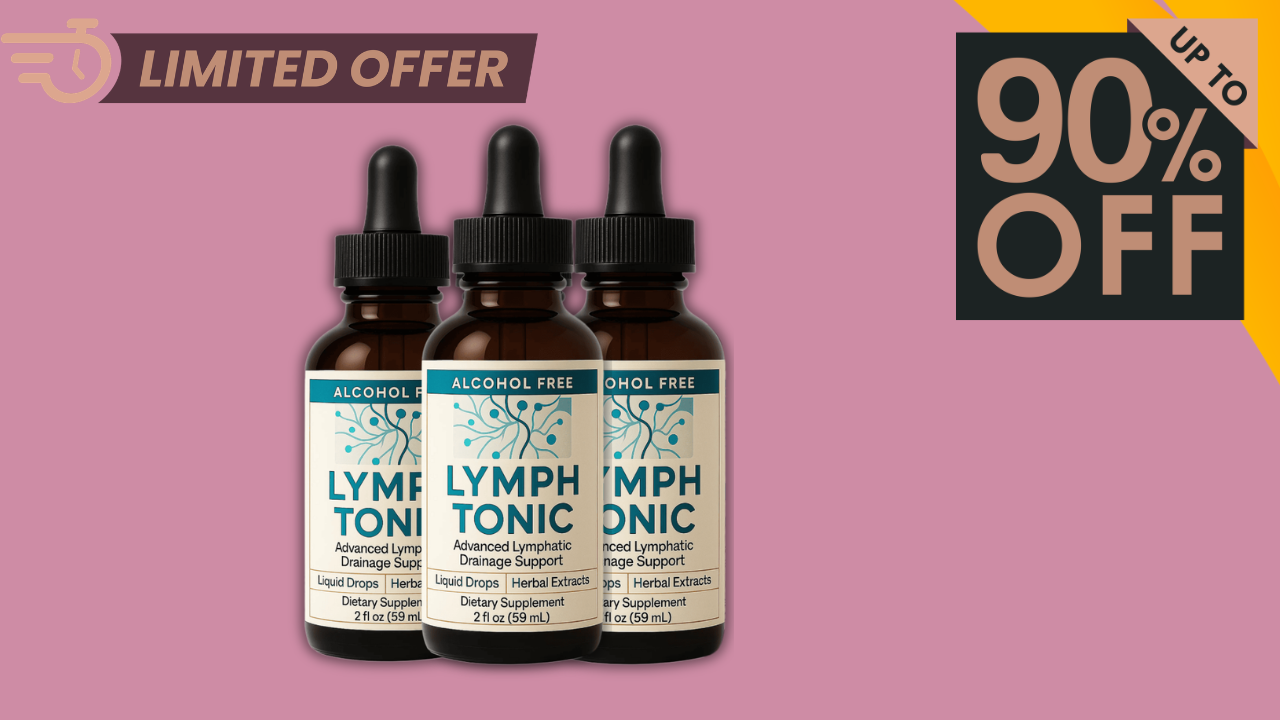
Lymph Tonic Reviews
Lymph Tonic Reviews: Let me just say it.
Most Lymph Tonic Reviews floating around the USA right now feel like they were written by a caffeinated sales funnel in a fake mustache. You know the type. Big promises. Zero friction. Every sentence sounds like it’s trying to tackle your wallet into the end zone. “No scam.” “100% legit.” “Highly recommended.” “Life-changing.” It gets ridiculous fast, and weirdly… familiar. Like walking into a mall kiosk in 2007 and being told a shiny bottle is basically destiny.
That’s how bad advice spreads.
It spreads because it is easy. It is fast. It tastes good in the mouth, like junk food, and people in the USA are busy and tired and half the time just want someone to say, “Relax, this one’s safe, it works, now click buy.” I get it. I really do. A while back I was scanning supplement pages late at night — laptop warm, coffee gone cold, eyes kind of burning — and after the fifth “official review” that all sounded suspiciously like cousins at a family reunion, I had that same thought: are any of these pages actually helping people think, or are they just greasing the slide?
That’s what this is about.
This piece is a blunt, messy, honest-ish breakdown of the worst advice wrapped around Lymph Tonic Reviews in the USA in 2026. Not because the product must be terrible. Not because it must be amazing either. But because the advice around products like this is often hotter than a parking lot in Arizona and about as balanced as a shopping cart with one broken wheel.
And there are some hard facts to keep in the room. FDA says dietary supplements are not approved before sale the way drugs are, and supplement marketers cannot legally present a supplement as if it treats, cures, or prevents a specific disease. The familiar DSHEA disclaimer exists for exactly that reason. FTC also says health-product claims must be truthful, not misleading, and backed by evidence. In December 2025, the FTC warned 10 companies over possible violations of the Consumer Review Rule, including misleading reviews and testimonials. That’s the landscape. That’s the weather outside.
So if you’re searching Lymph Tonic Reviews in the USA because you want the straight version, good. You should.
Because what you don’t need is another page screaming at you with fireworks and fake certainty.
| Feature | Details |
|---|---|
| Product Name | Lymph Tonic |
| Type | Alcohol-free herbal liquid dietary supplement |
| Purpose | Marketed for lymphatic drainage support, circulation support, and fluid balance |
| Main Claims in Reviews | “Highly recommended”, “Reliable”, “No scam”, “100% legit” |
| Bottle Size | 2 fl oz (59 mL) |
| Serving Size | 2 droppers |
| Servings Per Bottle | 30 |
| Key Ingredients Mentioned | Boswellia Serrata, Curcumin, Baicalein, Omega-3 Fatty Acids, Horse Chestnut Extract, Nattokinase |
| Pricing Range | $158 for 2 bottles, $207 for 3 bottles, $294 for 6 bottles |
| Refund Terms | 60-day money-back guarantee |
| Authenticity Tip | Buy only through the stated official seller if you want the promoted pricing and refund terms |
| USA Relevance | Marketed to USA supplement buyers with USA manufacturing and “official review” style pages |
| Risk Factor | Hype-heavy review pages, exaggerated expectations, review manipulation concerns across the industry |
| Real Customer Reviews | Mostly promotional-style positive reviews are easy to find; strong independent review depth still appears limited |
| Guarantee | 60-DAY MONEY BACK GUARANTEE |
What Lymph Tonic seems to be, before the yelling starts
Based on the sales-page content you shared, Lymph Tonic is an alcohol-free liquid herbal supplement positioned for lymphatic drainage support, circulation support, and healthy fluid balance. The page highlights ingredients like Boswellia Serrata, Curcumin, Horse Chestnut Extract, Nattokinase, Baicalein, and Omega-3 fatty acids. It also pushes USA manufacturing, third-party testing language, and a 60-day money-back guarantee. That’s the basic structure of the offer. It’s not hidden. It’s just heavily dressed up. A bit like a used car with very glossy tires.
And yes, when you look around in 2026, there are “review” pages and syndicated promotional articles describing it in broadly similar ways, which suggests the online conversation is being shaped heavily by promotion-first content, not by years of broad, independent consumer analysis. That doesn’t prove fraud. It just means smart USA readers should keep one eyebrow raised. Maybe both.
Now let’s deal with the worst advice.
Myth #1: “If a page says ‘100% legit’ then the case is closed.”
This one is painfully dumb, and still — still — it works on people.
A review page slaps “100% legit” in the headline, maybe throws in “no scam” and “USA official report” for seasoning, and suddenly readers are supposed to exhale and stop asking questions. That is not how credibility works. That is how copywriting works.
FDA is very plain about this stuff. It does not approve dietary supplements for safety or effectiveness before they are marketed, and supplements cannot legally be marketed as products that diagnose, treat, cure, or prevent specific diseases. So the phrase “100% legit” is not some legal stamp from heaven. It’s a confidence phrase. A mood. A sales blanket.
Why this advice is rotten
Because “legit” is vague enough to hide a truck in.
A product can be:
- legitimately sold
- neatly packaged
- backed by a refund policy
- marketed from a polished USA landing page
…and still not be the right choice for you. Or still be oversold. Or still leave big questions hanging, like dosage transparency, evidence quality, review authenticity, or just whether the marketing feels like it was written by a motivational speaker locked inside a coupon popup.
What happens if you believe it
You stop evaluating the product and start obeying the tone.
That is a dangerous habit, honestly. Once you get used to letting “legit” do all the thinking for you, every shiny bottle starts looking trustworthy. That’s not consumer intelligence. That’s sedation with bold text.
The truth that actually works
A better way to read Lymph Tonic Reviews in the USA is this: trust markers matter, but they do not finish the argument. Lymph Tonic appears to have some trust markers from the material you gave me — clear serving size, identifiable ingredients, USA manufacturing language, refund policy, supplement disclaimer language. Fine. Good. But those details should begin your evaluation, not end it.
Myth #2: “All complaints are fake, jealous, or written by competitors hiding in the bushes.”
I love this one because it’s so lazy. Almost athletic in its laziness.
If a review is positive, apparently that’s “social proof.” If it’s negative, suddenly it’s sabotage? Please. That’s not analysis, that’s emotional cherry-picking with a necktie on.
And look, sure, fake complaints exist. The internet is a weird carnival. But real complaints exist too. In the USA supplement market, people complain for all kinds of normal reasons:
- price shock
- taste issues
- shipping frustration
- refund confusion
- pressure-heavy sales pages
- unrealistic expectations
- not liking liquid supplements
- not noticing enough difference to justify the spend
That doesn’t mean the product is bad. It means buyers are humans, which is inconvenient for affiliate copywriters who want every reader to behave like an obedient cartoon wallet.
FTC’s Consumer Review Rule matters here. The FTC said in late 2025 that businesses can violate the rule by misrepresenting whether reviews are genuine, whether reviewers actually used the product, or whether sentiment was manipulated. So yes, the whole USA review ecosystem deserves skepticism, especially when every page sounds like it came out of the same blender.
Why this advice is flawed
Because it trains buyers to dismiss useful friction.
A complaint about “this page felt too aggressive” may be more useful than a glowing five-star paragraph about “loving the journey.” One is telling you something concrete about the selling environment. The other might just be enthusiasm. Or marketing perfume. Hard to say.
What happens if you ignore complaints
You become easier to close. Easier to nudge. Easier to manipulate with fake urgency and borrowed certainty. Not ideal. Not ideal at all.
The truth that actually works
Read complaints as signals, not scripture. Smart USA buyers looking through Lymph Tonic Reviews should separate silly complaints from useful ones. “This didn’t cure my condition” is a red flag about expectations, because supplements are not drugs. “The sales page pushed the 6-bottle package too hard” is actually informative, because that’s plainly part of the sales strategy from the material you shared.
Myth #3: “The ingredients sound fancy, so the product must be basically proven.”
This is where people put on reading glasses and accidentally become hypnotized by nouns.
Boswellia. Curcumin. Nattokinase. Horse Chestnut. Omega-3. Baicalein.
Those are recognizable names in wellness and supplement marketing. They sound grounded. Serious. Herbaceous, even. Like something you’d hear in a calm health-food store while smelling eucalyptus and regret.
But ingredient recognition is not formula proof.
It just isn’t.
FTC guidance says health claims need appropriate substantiation. Not vibes. Not ingredient name-dropping. Not “trust me, this herb has been used for centuries.” That line may be true in one sense and still irrelevant in another. History is not a dosing chart.
Why this advice falls apart
Because several questions stay unanswered:
- how much of each ingredient is included?
- are the forms standardized?
- is the amount likely meaningful?
- is the evidence about the exact finished formula or just the general ingredients?
- what does the proprietary blend hide?
From your source content, Lymph Tonic provides a 600 mg proprietary herbal blend per serving, but not the exact amount of each active. That’s a limitation. Not a fatal flaw, necessarily — but definitely a limitation. USA buyers deserve to see that clearly.
What happens if buyers fall for this
They confuse recognition with proof. They buy the ingredient aura. The product starts to feel “scientific enough” and that feeling does the rest.
And that’s the trap. Not always a malicious one, but a trap just the same.
The truth that actually works
A good Lymph Tonic Reviews article in the USA should say the formula theme is coherent. It’s obviously built to appeal to buyers interested in circulation support, fluid balance, and lymphatic support. That’s fair. What’s not fair is pretending that familiar ingredients magically answer dose quality, formulation balance, or expected outcomes for the average buyer.
Myth #4: “Buy the 6-bottle package or you’re wrecking your own results.”
Here we go. The upsell ballet.
The pricing structure you shared is extremely direct-response, very USA supplement funnel, very “pick the giant bundle and feel smart doing it.” Two bottles for $158. Three for $207. Six for $294. The 6-bottle option gets the loudest praise, the deepest discount angle, and the strongest emotional push about not running out mid-transformation.
Is it the best price per bottle? Yes.
Is it therefore the best decision for every person in the USA? Absolutely not. That leap is where common sense twists an ankle.
Why this advice is nonsense
Because the “best value” on paper is not always the best decision in real life.
Some buyers want lower risk, even if the price-per-bottle is worse. Some are not sure they’ll like a liquid supplement. Some hate committing to six bottles of anything, which — honestly — fair enough. I once bought a giant bulk pack of a “healthy” drink mix because the discount looked amazing, and after three days the smell alone made me angry. Money saved, apparently. Terrific.
What happens if people force the big bundle
Sometimes nothing bad. They’re happy. Fine.
Sometimes they feel trapped by their own purchase. They get defensive. They start convincing themselves they “must” love it because the order total was large and now pride has entered the room. Pride is expensive. So is denial.
The truth that actually works
A smart read of Lymph Tonic Reviews in the USA is this: the 6-bottle option offers the strongest unit-price value, but the best decision depends on comfort level, budget, confidence in the format, and tolerance for uncertainty. A refund policy helps, yes, but it does not erase buyer psychology. Nothing does.
Myth #5: “Positive testimonials mean most USA buyers will probably get the same result.”
No. Nope. Not how that works.
Testimonials are emotionally powerful because they smell like reality. Someone says their legs felt better, or they liked the alcohol-free formula, or it fit nicely into a routine. And maybe all of that is sincere. It could be. But FTC guidance is clear that endorsements and testimonials cannot create misleading impressions about what consumers are likely to experience. That’s a big deal. Because a lot of review pages glide right past that boundary as if it’s painted in invisible ink.
Why this advice is bad
Because testimonials are:
- selective
- emotional
- anecdotal
- incomplete
- not the same as broad substantiation
That doesn’t make them worthless. It makes them limited.
A single happy quote is not a map of average experience. It’s one flashlight beam in a dark room. Helpful maybe, but you still can’t see the whole furniture layout. You can still stub your toe.
What happens if you over-trust testimonials
You stop evaluating the product and start borrowing somebody else’s optimism. Which sounds cozy, but it’s not a buying strategy.
The truth that actually works
Use testimonials as texture. Not verdict. For Lymph Tonic Reviews, that means letting positive customer comments add color while still paying attention to the supplement disclaimer, the limits of formula transparency, and the fact that independent long-run USA review depth seems limited compared with the volume of promotional pages.
The blunt middle ground — which is where the truth usually lives, annoyingly
Here’s the boring answer. The one that won’t get screamed in all caps on a parasitic Google page.
Lymph Tonic appears to be a real supplement offer marketed in the USA, with a clear category position: alcohol-free liquid formula, lymphatic support angle, circulation support angle, and a standard supplement-style sales structure. The bottle details are spelled out. The featured ingredients are named. The money-back guarantee is part of the pitch. Those are positives. Real ones.
At the same time:
- FDA does not pre-approve supplements for effectiveness before sale.
- Supplements cannot legally be marketed as disease cures or treatments.
- FTC says health claims need evidence and reviews cannot be deceptive.
- The review environment around products like this in 2026 is noisy, promotional, and honestly kind of swampy.
So the useful position is not “this is absolutely amazing” or “this is definitely trash.”
The useful position is: this might be a fit for some USA buyers, but only if they can resist the dumbest advice surrounding it.
That’s less thrilling, I know. More true though.
Why bad advice spreads so freakishly easily
Because it gives relief before it gives clarity.
That’s the whole game. A scared, curious buyer searches Lymph Tonic Reviews and wants peace of mind. Bad advice steps in and says:
- “relax, it’s legit”
- “ignore the complaints”
- “the ingredients are powerful”
- “buy the biggest bundle”
- “everyone loves it”
And boom, the buyer feels calmer. Not wiser. Just calmer. It’s the emotional equivalent of putting a blanket over a smoke alarm.
That’s why you have to get a little stubborn in the USA supplement market. A little rude, maybe. You have to keep asking:
Who is this page helping?
What is it leaving out?
Why does every sentence sound like it’s trying to escort me to checkout?
Those questions save money.
USA buyers who are sick of the noise
If you’re reading Lymph Tonic Reviews because you genuinely want to know whether this product is worth trying, here’s my advice — the non-stupid version.
Do not let louder headlines do your thinking.
Do not assume “100% legit” means solved.
Do not assume every complaint is fake.
Do not treat a recognizable ingredient list like a courtroom verdict.
Do not let bundle pricing bully you into overcommitting.
Do not confuse testimonials with proof.
Instead, be annoyingly clear-eyed.
Look at the category. Look at the claims. Look at what is disclosed, and what isn’t. Notice the pressure points in the funnel. Notice how the USA review ecosystem in 2026 is full of pages that sound independent until you squint a little and realize they all march to the same drum.
And then decide from a stronger place.
Not from fear.
Not from hype.
Not from the weird sugar rush of being told what you want to hear.
That’s how buyers in the USA protect themselves now. Not by becoming cynical, exactly. Just sharper. Harder to fool. Slightly less hypnotized by shiny adjectives.
Frankly, that skill matters more than any single supplement ever will.
5 FAQs About Lymph Tonic Reviews — same blunt tone, same honest energy
1. Are Lymph Tonic Reviews in the USA mostly trustworthy?
Some are useful, some are just sales pages dressed like neutral reviews. That’s the messy truth. In 2026, FTC guidance and enforcement around deceptive reviews is still very relevant, so USA buyers should read review pages carefully, especially when they sound too polished or too certain.
2. Is Lymph Tonic FDA approved?
No — at least not in the way people usually mean. FDA says it does not approve dietary supplements for safety and effectiveness before they are sold. That’s one of the biggest misunderstandings in supplement marketing, and yes, it still trips people up in the USA all the time.
3. Why do so many Lymph Tonic Reviews say “no scam” and “100% legit”?
Because reassurance sells. Those phrases calm anxious buyers fast. But they are not proof by themselves. A proper USA review should still examine claims, disclaimers, ingredient transparency, pricing pressure, and refund terms instead of just repeating comfort words.
4. Are complaints about Lymph Tonic always fake?
No. Some may be exaggerated, sure. But others can highlight normal consumer issues like pricing, taste, pressure-heavy marketing, or unrealistic expectations. The smart move is not to worship complaints or dismiss them. Sort them. Read them like clues.
5. What is the smartest way to read Lymph Tonic Reviews before buying?
Look for balance. A useful Lymph Tonic Reviews page should explain what the product is, what it claims, what the supplement disclaimer means, and what questions remain unanswered. If the page only praises, or only attacks, it’s probably trying to control your mood more than improve your judgment.
The Oracle of Insight Review – 2026 USA Users Expose Critical Gaps, Truths, and Hidden Opportunities