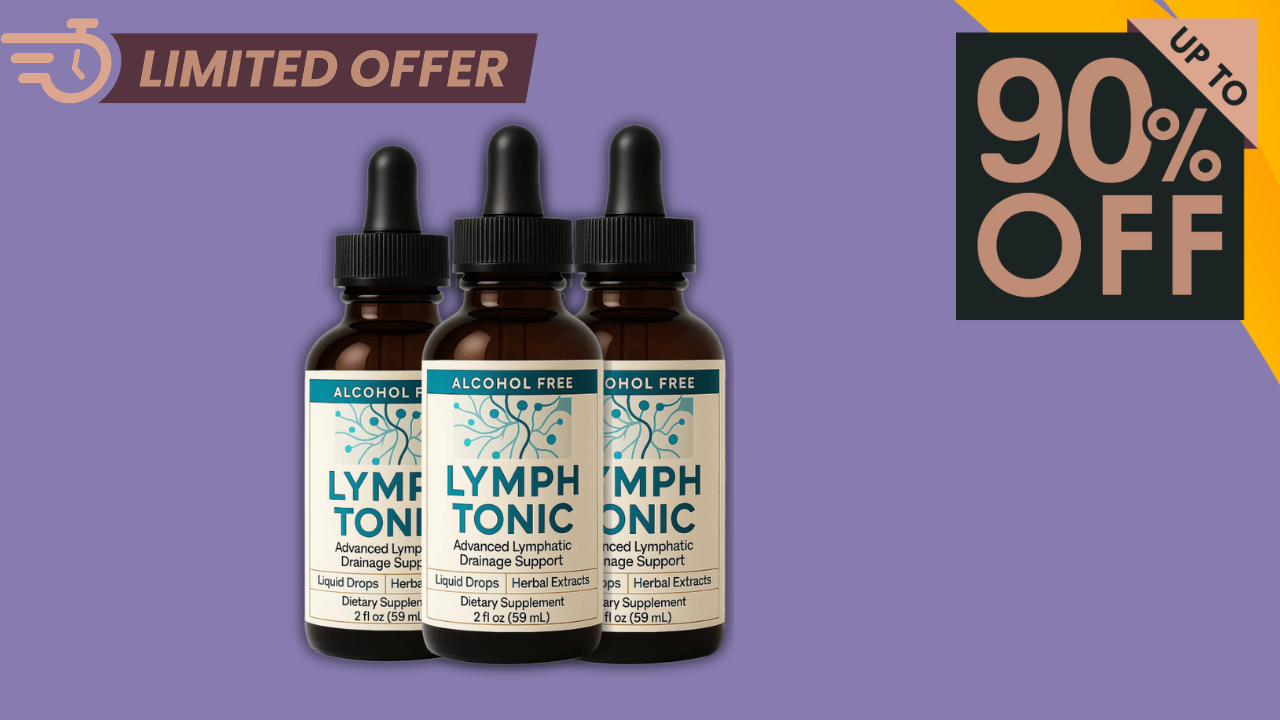
Lymph Tonic Review
Lymph Tonic Review:Let’s start where most Lymph Tonic Review pages completely lose the plot.
They act like the biggest problem is whether the product is “real” or “fake,” “scam” or “no scam,” “highly recommended” or somehow evil. That’s a child’s version of a buying decision. It sounds dramatic. It feels satisfying. It also misses the stuff that actually matters to people in the USA who are trying to make a smart call in 2026.
Because the real issue, weirdly enough, is not always what these pages say. It’s what they leave out.
That’s the part that gets me. Maybe because I’ve seen this movie too many times — late-night searching, ten tabs open, dry eyes, one hand on a mug of coffee that’s gone cold and a little metallic-tasting, and every “review” page sounding like a clone of the one before it. Different font, same heartbeat. Same sleepy confidence. Same phrases. Lymph Tonic Review, “100% legit,” “no scam,” “reliable,” “I love this product.” After a while the whole thing starts to feel like being sold a flashlight in broad daylight.
| Feature | Details |
|---|---|
| Product Name | Lymph Tonic |
| Type | Alcohol-free herbal liquid dietary supplement |
| Purpose | Marketed for lymphatic drainage support, circulation support, and fluid balance |
| Main Claims in Reviews | “Highly recommended”, “Reliable”, “No scam”, “100% legit” |
| Bottle Size | 2 fl oz (59 mL) |
| Serving Size | 2 droppers |
| Servings Per Bottle | 30 |
| Key Ingredients Mentioned | Boswellia Serrata, Curcumin, Baicalein, Omega-3 Fatty Acids, Horse Chestnut Extract, Nattokinase |
| Pricing Range | $158 for 2 bottles, $207 for 3 bottles, $294 for 6 bottles |
| Refund Terms | 60-day money-back guarantee |
| Authenticity Tip | Buy from the official seller if you want the listed bundle terms and refund conditions |
| USA Relevance | Marketed toward USA buyers, with USA manufacturing language and official-style review pages |
| Risk Factor | Hype-heavy marketing, partial ingredient transparency, review ecosystem noise |
| Real Coustmer Reviews | Positive promotional reviews are common; deeper independent USA review coverage still looks thin |
| Guarantee | 60-DAY MONEY BACK GUARANTEE |
And yes, Lymph Tonic does appear to be a real supplement offer. The official-style product information and promotional coverage describe it as an alcohol-free liquid herbal supplement marketed for lymphatic drainage support, circulation, and fluid balance, with highlighted ingredients including Boswellia Serrata, Curcumin, Horse Chestnut Extract, Nattokinase, Baicalein, and Omega-3 fatty acids. The same materials also emphasize USA manufacturing, third-party testing language, and a 60-day money-back guarantee.
But that still doesn’t answer the biggest buyer question.
Not “is it on the internet.”
Not even “is it sold in the USA.”
The better question is: what’s missing from the Lymph Tonic Review conversation, and how does filling those gaps lead to better decisions, better expectations, and way less regret?
That’s what this piece is about.
Because in the USA, dietary supplements are regulated differently from drugs, and FDA says it does not approve dietary supplements for safety and effectiveness before they are marketed. FDA also says supplements are not FDA-approved to treat or prevent disease, and health-related marketing must stay within those legal lines. Meanwhile, the FTC’s Consumer Reviews and Testimonials Rule, which took effect in October 2024, and the FTC’s December 2025 warning letters show that deceptive review practices are not some old internet ghost story — they are still a real issue.
So if you’re reading this Lymph Tonic Review from somewhere in the USA — maybe on a lunch break, maybe at 1:14 a.m. with your phone glowing like a tiny interrogation lamp — here are the missing pieces that matter most.
Missing Piece #1: Almost No One Explains What a Supplement Actually Is — and Is Not
This is the first hole. The biggest one too.
A lot of Lymph Tonic Review pages in the USA blur the line between a wellness-support supplement and something closer to a medical treatment. They may not say it directly, not always, but the vibe gets slippery. The suggestions swell. The implications start doing yoga stretches they probably shouldn’t.
FDA is pretty direct about this: dietary supplements are regulated under a different framework than drugs, FDA does not approve them for safety and effectiveness before sale, and supplements are not FDA-approved to treat or prevent disease. If a supplement sounds like a miracle cure, or a quick fix for a health problem, FDA basically says that should raise eyebrows. Maybe both eyebrows.
Why this gap matters
If you misunderstand the category, everything downstream gets distorted.
Then a Lymph Tonic Review stops being something you assess carefully, and starts becoming a place where you project every hope you have onto a bottle. That’s not really buying. That’s emotional outsourcing.
You see “supports lymphatic drainage” and your brain quietly upgrades it to “this will fix the whole thing.” You see “circulation support” and somehow hear “guaranteed result.” It happens fast. Faster than people admit.
What changes when you fill this gap
When USA buyers understand that Lymph Tonic is being sold as a dietary supplement for support — not a drug, not an FDA-approved treatment — they start asking better questions.
Not:
- “Will this definitely solve everything?”
But:
- “Does this kind of supplement make sense for what I’m looking for?”
- “Are the claims modest or inflated?”
- “Am I reading this page too emotionally?”
That shift sounds small. It isn’t. It’s like turning on a light in a room you didn’t realize was dim.
That’s where better decisions start.
Missing Piece #2: Ingredient Names Are Everywhere, But Exact Doses Are Still Foggy
This one drives me a little crazy, honestly.
The formula sounds impressive on paper. Boswellia. Curcumin. Nattokinase. Horse Chestnut. Baicalein. Omega-3s. It’s a lineup with weight, at least on the marketing side. And Lymph Tonic’s 2026 promotional materials clearly lean into those names, because they sound strong, familiar, and a little scientific in a comforting sort of way.
But a smart Lymph Tonic Review has to do more than repeat the label highlights like a parrot in a blazer.
Because from the product details available, the formula is presented as a 600 mg proprietary blend per serving, which means buyers can see the featured ingredients, but not the exact amount of each one. FDA’s supplement guidance also notes that for more information than the label provides, consumers may need to contact the manufacturer directly.
Why this gap matters
Ingredient recognition and ingredient transparency are not the same thing. Not remotely.
A formula can sound sophisticated and still leave you guessing:
- Which ingredient is carrying the most weight?
- Are some ingredients included in very small amounts?
- How should you compare it with other USA supplement options?
- Are you being sold names, or a truly clear formulation?
And look, proprietary blends are not rare. That’s not some scandal by itself. But in a Lymph Tonic Review, pretending this isn’t a limitation is dishonest. Or lazy. Maybe both.
Real-world relevance
FTC guidance says health-product claims must be truthful, not misleading, and backed by evidence. When review pages use impressive ingredient names as if they automatically settle the question, they’re often smuggling confidence into the room without showing the whole receipt.
What changes when you fill this gap
You stop being dazzled by the ingredient roll call.
Instead, a USA buyer reading a Lymph Tonic Review starts to think:
- “Okay, I see the ingredient theme.”
- “But what can I verify, exactly?”
- “What is still hidden in the fog here?”
That’s not negativity. That’s discipline. Boring, useful discipline.
And that discipline leads to smarter comparison-shopping, less emotional buying, and fewer post-purchase “wait, what did I actually buy?” moments.
Missing Piece #3: Review Volume Is Being Mistaken for Review Independence
This is such a huge gap in Lymph Tonic Review searches right now in the USA.
If you search around, you’ll notice a pattern. Plenty of positive coverage. Plenty of enthusiastic phrasing. Plenty of pages saying almost the same things in slightly different clothes. That repetition can create the feeling of consensus. But feeling and fact are not twins. Sometimes they’re not even cousins.
The currently visible 2026 coverage around Lymph Tonic includes official-style product pages and review-style articles that repeat the same general narrative: alcohol-free liquid formula, support for fluid balance and circulation, featured botanicals, USA manufacturing angle, bundle deals, guarantee. That consistency may reflect coordinated promotional messaging just as much as independent evaluation.
Why this gap matters
Because repetition creates comfort.
If ten pages say the same thing, many readers in the USA unconsciously assume ten separate minds reached the same conclusion. Sometimes that’s true. Sometimes it’s just content syndication wearing ten different hats and waving from a parade float.
And the FTC’s review rule exists precisely because fake or deceptive reviews and testimonials can distort the marketplace. The rule went into effect on October 21, 2024, and in December 2025 the FTC sent warning letters to 10 businesses over possible violations. That’s not abstract. That’s recent. That’s part of the 2026 reality USA buyers are operating in now.
What changes when you fill this gap
You stop counting positive pages and start weighing source quality.
That means asking:
- Is this actually independent?
- Is there original analysis here?
- Does this page admit uncertainty anywhere?
- Is it reviewing, or just herding?
A stronger Lymph Tonic Review mindset in the USA is not “How many glowing pages can I find?” It’s “How many of these pages actually help me think?”
That one correction is huge. Quietly huge.
Missing Piece #4: Almost Nobody Talks Honestly About the Funnel Psychology
This part makes me laugh a little. Not because it’s funny, exactly. More because it’s so obvious once you see it — like noticing every magician has suspicious sleeves.
From the pricing you provided, Lymph Tonic is sold in three main bundle options:
- 2 bottles for $158
- 3 bottles for $207
- 6 bottles for $294
The 6-bottle package gets the biggest spotlight, the best per-bottle price, and the strongest emotional push about long-term use, continuity, and not running out at the wrong moment. That structure is classic direct-response supplement funnel design, especially in the USA market.
Why this gap matters
Because pricing tables are not neutral. They are persuasion architecture.
A lot of Lymph Tonic Review pages just repeat the package options as if they’re reading weather data. But the page isn’t just telling you the prices. It is shaping your emotion:
- fear of missing out
- fear of paying more later
- fear of interrupting “momentum”
- relief if you choose the biggest bundle
That’s not evil. It is, however, strategic. Very strategic.
Little practical example
Think about two USA buyers.
One sees the 6-bottle deal and thinks, “Best value, obviously.”
The other pauses and thinks, “Sure, lowest cost per bottle… but do I even like liquid supplements? Do I trust this enough yet? Is the bigger bundle helping me, or helping the funnel?”
Second buyer may look less “decisive,” but often ends up feeling more in control afterward. That matters.
What changes when you fill this gap
You separate two questions that should never be fused:
- Which option is the cheapest per bottle?
- Which option fits my confidence level and budget right now?
That’s a breakthrough. A real one.
Because a good Lymph Tonic Review in the USA should not just help you see the deal. It should help you see the pressure built around the deal.
Missing Piece #5: Complaints Are Mentioned, But Rarely Interpreted Well
“Complaints” is one of those words that gets used like a hammer.
Some pages weaponize complaints and scream scam. Others swat every complaint away like it’s a mosquito from a jealous competitor. Both approaches are dumb. And exhausting.
The better question in a Lymph Tonic Review is not “Are there complaints?” There are always complaints, about almost everything sold to human beings. The better question is: what kind of complaints are they? what do they actually mean?
Because not all complaints carry equal weight.
Why this gap matters
A complaint that says “this didn’t cure my condition” may actually reveal a category misunderstanding, since FDA says supplements are not FDA-approved to treat or prevent disease. A complaint about taste, shipping, bundle pressure, or the feeling of being over-sold may tell you much more about the actual buyer experience.
FTC’s review guidance matters here too. Deceptive reviews and testimonials can distort consumer judgment, which means complaint ecosystems can be manipulated in both directions — too negative, too positive, too neat, too clean. Real life is messier than that. Usually stickier too.
What changes when you fill this gap
You stop reacting like a startled squirrel and start sorting.
A better USA buyer framework for Lymph Tonic Review content looks like this:
- complaints about impossible expectations = probably less useful
- complaints about pricing pressure = more useful
- complaints about lack of dose transparency = very useful
- complaints about taste or liquid format = situational, but still real
- complaints about “it sounded too good to be true” = worth paying attention to
That sorting process is what turns noise into signal.
Missing Piece #6: Too Few Reviews Explain Why “FDA Approved” Language Matters So Much
This one should be obvious by now, but people still trip over it in the USA every single year.
FDA says clearly that it does not approve dietary supplements for safety and effectiveness before they are sold, and supplements are not FDA-approved to treat or prevent disease. So any Lymph Tonic Review that makes the product sound officially validated in a drug-like way is either confused, reckless, or just trying to borrow authority it didn’t earn.
Why this gap matters
Because the phrase “FDA approved” has emotional power in the USA. It sounds final. It sounds safe. It sounds like a grown-up in a lab coat has already handled all the worrying for you.
But for supplements, that’s not how it works.
What changes when you fill this gap
You stop being hypnotized by official-sounding language and start reading the actual category more accurately. That lowers the risk of inflated expectations. It also makes your Lymph Tonic Review reading much more grounded, much less dreamy.
Dreamy buying is expensive.
Missing Piece #7: Hardly Anyone Explains What “Success” Even Means Here
This is the sneakiest gap of all.
Many Lymph Tonic Review pages in the USA treat success as if it means one thing only: buying the product, feeling reassured, and never doubting yourself again. That’s not success. That’s a checkout event.
Real success is different.
Real success means:
- understanding what the product is
- knowing what is disclosed and what isn’t
- recognizing funnel pressure
- separating review volume from independent credibility
- matching the purchase to your own comfort level
That’s not flashy. It won’t fit neatly into some giant headline. But it’s the real breakthrough.
Because a supplement purchase can be “legit” and still be a bad fit. It can be well-marketed and still not earn blind trust. It can be promising and oversold at the same time. Those things can coexist, annoyingly.
What changes when you fill this gap
You regain control.
And once that happens, a Lymph Tonic Review stops being a permission slip and starts becoming what it should have been all along: a tool for judgment.
That’s powerful. Maybe not glamorous, but powerful.
A simple buyer scenario — and why it matters in the USA right now
Picture two people in the USA looking at the same Lymph Tonic Review content.
The first person sees:
- “highly recommended”
- “100% legit”
- “USA made”
- “best value”
- “don’t run out”
And they buy mostly on emotional momentum.
The second person sees those same lines, but also notices:
- FDA does not approve supplements before sale
- the formula uses a proprietary blend structure
- promotional repetition is not the same as independent review depth
- the biggest bundle may be best for the seller, not automatically for the buyer
- complaint interpretation matters more than complaint existence
Which person is more likely to feel clear-headed afterward?
Usually the second one. Not always. But usually.
That’s why these gaps matter so much in 2026 USA search results. The online supplement space is crowded, noisy, overconfident, and a little feverish. FDA’s recent supplement safety updates and the FTC’s recent review-rule activity underline the same basic point: buyers cannot afford to treat marketing certainty as evidence.
Maybe the most useful part of this whole Lymph Tonic Review
If you’re in the USA and trying to decide what to do with all these Lymph Tonic Review pages, here’s the honest answer.
Don’t just look for praise.
Don’t just look for complaints.
Look for what’s absent.
Look for:
- missing category context
- missing dose transparency
- missing independence in the review ecosystem
- missing honesty about funnel psychology
- missing interpretation of complaints
- missing clarity about FDA approval
- missing definition of what success even means
That’s where the truth usually hides. Not in the loud claims, not in the syrupy reassurance, not in the theatrical certainty. In the gaps. Always in the gaps.
And once you start noticing them, you can’t really unsee them. Which is both annoying and helpful, kind of like finally noticing a buzzing sound in your refrigerator. Irritating, yes. But now you know.
So fill the gaps before you follow the crowd.
That’s the message. That’s the move.
A strong Lymph Tonic Review should not just tell USA buyers what to think. It should help them think better. And if a page can’t do that — if it only praises, only pushes, only reassures, only sells — then maybe it’s not really a review at all.
Maybe it’s just a checkout button wearing a paragraph costume.
5 FAQs About Lymph Tonic Review — same tone, no fluff
1. Is Lymph Tonic FDA approved in the USA?
No. FDA says it does not approve dietary supplements for safety and effectiveness before they are marketed, and supplements are not FDA-approved to treat or prevent disease. So if a Lymph Tonic Review implies otherwise, that’s a problem.
2. Why do so many Lymph Tonic Review pages say “100% legit”?
Because reassurance sells. Those phrases calm people down quickly, especially in the USA supplement market where buyers worry about scams. But “100% legit” is not the same as fully transparent, independently verified, or right for every buyer.
3. Are complaints about Lymph Tonic always meaningful?
Not always. Some complaints may come from unrealistic expectations, especially if someone expected a supplement to act like a treatment product. Others — like concerns about bundle pressure, transparency, or review quality — can be much more useful. That’s why a good Lymph Tonic Review sorts complaints instead of just counting them.
4. Is the 6-bottle bundle automatically the best choice?
It’s the lowest cost per bottle based on the available pricing, yes. But that doesn’t make it automatically the smartest choice for every USA buyer. Best value and best fit are not the same thing. A proper Lymph Tonic Review should say both out loud.
5. What is the smartest way to read a Lymph Tonic Review in 2026 USA?
Read it with a filter. Check the supplement category context, the ingredient transparency, the independence of the review source, the sales psychology around bundles, and whether the page treats complaints honestly. If it only sounds excited, it probably wants your money more than your clarity.
Lymph Tonic Reviews: 9 Stupidest Myths in 2026 USA — and the Brutal Truth Most Buyers Don’t Hear