Rise from depression Review

Rise from depression Review: Bad advice spreads because it is cheap. Cheap to say, cheap to share, cheap to believe for five bright little seconds. That’s the ugly trick. Somebody in the USA says, “Just be positive,” somebody else says, “Go outside and snap out of it,” and suddenly a whole parade of nonsense starts marching through Google, YouTube, Facebook, Reddit, group chats, church parking lots, office lunchrooms, everywhere. It sounds confident, so people confuse it with truth. Confidence has been getting away with murder online for years.
And then the worst part happens. The advice fails, obviously, because bad advice usually does, and instead of blaming the advice, people blame themselves. They think maybe they are weak, lazy, dramatic, broken in some deluxe collector’s-edition way. I hate that. Honestly, I do. It’s like handing someone a paper umbrella in a hurricane and then mocking them when they get soaked. A little cruel. A little stupid too.
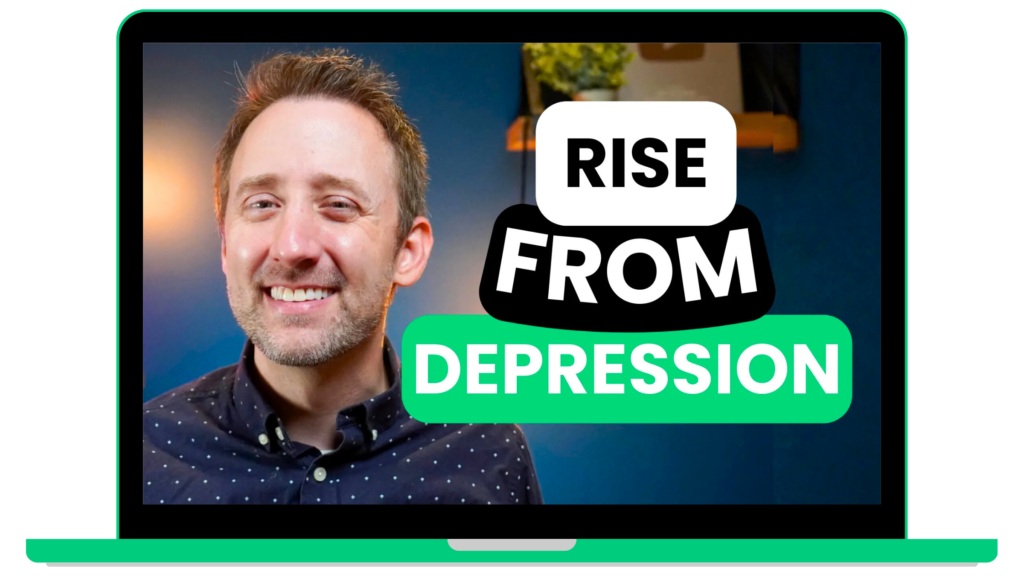
That is why this Rise from depression Review is not going to do the usual fake dance. No breathless “life-changing miracle.” No “this one weird trick fixed everything by Tuesday.” No syrupy nonsense. Based on the official course platform, Rise From Depression is presented as a self-guided depression course on Nathan Peterson’s OCD & Anxiety site, with evidence-based strategies, preview access, and related pages that describe 13 self-paced videos plus worksheets. The same platform presents it as one course inside a broader mental health education ecosystem.
So, yes, let’s drag the dumbest advice into the light and see what’s left standing.
| Feature | Details |
|---|---|
| Product Name | Rise From Depression |
| Type | Self-guided online depression course |
| Creator | Nathan Peterson |
| Core Angle | Evidence-based strategies for depression |
| Format | 13 self-paced videos + worksheets |
| Access | Online, self-guided |
| Preview Option | Try for free / preview available |
| Main Claims in Reviews | “Highly recommended”, “Reliable”, “No scam”, “100% legit” |
| USA Relevance | Appeals to USA buyers wanting flexible, home-based support tools |
| Risk Factor | Unrealistic expectations, self-guided effort, not a replacement for crisis care |
| Authenticity Tip | Use the official course platform, not random third-party pages |
1. “Just think positive and everything will shift”
This advice should be packed into a box, labeled “fragile nonsense,” and mailed into the ocean.
It sounds good because it is neat. Tiny. Polished. It fits on a mug. It fits on a quote card. It fits in the mouth of somebody who wants to sound wise without doing the hard work of being useful. In the USA, this line gets recycled so often it’s basically public wallpaper now. “Choose joy.” “Shift your mindset.” “Good vibes only.” That last one especially makes me tired in my bones. Like fluorescent-light tired.
Depression is not a spilled coffee you wipe up with a positive attitude. It’s not that simple. And the official pages for this course do not seem to pretend that it is. They frame Rise From Depression as a self-guided course that teaches evidence-based treatment skills, not motivational glitter and a scented candle.
A lot of people already know their thoughts are dark, repetitive, twisted, mean. They know. Awareness is not the whole machine. Knowing your tire is flat does not put air in it. Knowing the fridge smells weird doesn’t clean it out. Strange comparison, maybe, but it works. Sort of. Anyway, the point is this: “just think positive” treats depression like a character flaw instead of something that often needs structure, repetition, and actual tools.
What actually works better: a more practical system. Lessons. Worksheets. Guided strategies. Something you can do when your mind is behaving like an unhelpful narrator in a bad movie. That’s one reason Rise from depression Review searches keep happening in the USA. People are exhausted by bumper-sticker advice. They want something with bones. The official course pages lean into structured learning, which is already more believable than “smile harder, champ.”
2. “Wait until motivation comes back, then start”
This one sounds gentle, almost caring. That’s why it’s dangerous.
“Take your time.”
“Start when you feel ready.”
“Don’t force it.”
Nice words. Soft little pillows of words. But depression often steals motivation first, which means waiting for motivation can turn into one long stupid loop. No motivation, so no action. No action, so life stays flat. Life stays flat, so motivation keeps hiding under the bed like a cat that heard thunder. Round and round. A tragic merry-go-round, except less fun and more sweat.
The public material for Rise From Depression does not frame the course as passive comfort-content. It frames it as self-guided, with preview access, videos, and worksheets, which implies doing, not just hoping. That matters. It matters a lot more than review writers sometimes admit when they’re busy yelling “highly recommended” like they’re being paid in fireworks.
I’ve seen this mindset a lot. Maybe you have too. People buy a tool and quietly expect the purchase itself to count as healing. I get the temptation. Truly. I’ve bought notebooks that I was convinced would reorganize my life. Beautiful notebooks. Thick paper. Fancy cover. Did they transform me? No. They sat on a desk looking expensive and smug.
What actually works better: small action before the feeling shows up. One lesson. One worksheet. One note. One tiny piece of movement. The official platform’s “try for free” and preview framing actually fits that better than the wait-for-a-sign fantasy. If you are reading a Rise from depression Review and it implies motivation must come first, that review is probably selling comfort, not clarity.
3. “If you need a course or help, you’re weak”
This advice is rotten. Truly rotten. Like fruit left in a hot car.
There is still a certain macho little script floating around the USA that says asking for help is weakness. Don’t use support. Don’t use courses. Don’t use therapy. Don’t admit you’re struggling. Just clench your jaw and stare nobly into the middle distance until your emotional life turns into drywall powder. It’s absurd. Also weirdly theatrical.
What makes the official Rise From Depression setup more grounded is that it lives on a broader mental health platform with other courses, tests, community resources, a YouTube channel, and related support material. That makes it look less like a random panic-buy product and more like part of a real education-based system. The official pages clearly position it as a self-guided option, not some mystical replacement for every kind of care a human being could ever need.
That distinction matters. Real things have limits. Fake miracle products almost never do. Fake junk promises everything: relief, certainty, radiant purpose, maybe better posture while it’s at it. Real offers usually look more modest. A bit boring, maybe. Boring is underrated though. Sometimes boring is where the truth lives, sitting quietly in sensible shoes.
What actually works better: using the level of support that fits where you are. Sometimes that is therapy. Sometimes it is a self-guided course. Sometimes it starts with a free preview and a healthy amount of skepticism, which is fine. Good, even. This Rise from depression Review would be useless if it pretended shame was a recovery method. It isn’t. It never was. And for USA buyers who want private, flexible, home-based tools, a structured course can be a reasonable option without being a magic answer.
4. “Go outside, drink water, meditate, done”
Let me be fair for a second before I get sarcastic again.
Yes, water matters.
Yes, movement can help.
Yes, sleep matters.
Yes, mindfulness can help some people.
There. Fairness achieved.
But when people throw those things around as if they are the entire answer, the whole thing starts to smell like internet wellness cosplay. Especially in the USA, where a lemon-water reel and a beige yoga mat apparently qualify some people to advise strangers on depression. It’s not that these habits are useless. It’s that they are often incomplete when presented as the full cure-all. Like handing someone one fork and calling it a full kitchen.
The official public framing of Rise From Depression appears broader than that. It is described as evidence-based and structured, with self-guided lessons and worksheets. That alone puts it in a different category from “drink more water and touch grass.”
A lot of Rise from depression Review pages get weird right here. Some oversell the course like it’s a miracle machine wrapped in angels and checkout buttons. Others dismiss it like it’s just recycled wellness chatter in nicer packaging. From the official pages, it looks more structured than that. More like a system, less like a slogan.
What actually works better: layered support and repeated tools. Lessons. Exercises. Journals. Prompts. Boring things, a little. Sure. But boring can still be useful. Sometimes the less flashy answer is the one that actually survives contact with real life. Which is rude, frankly, because flashy answers are more fun.
5. “Anything online is either a miracle or a scam”
The internet has the emotional range of a game-show buzzer now. Everything is either amazing or criminal.
Especially in USA review culture, where people talk about products like they’re either proposing marriage or filing a lawsuit. You see the same pattern all over Rise from depression Reviews too. One page screams, “I love this product, highly recommended, reliable, no scam, 100% legit,” and another acts like any digital course is automatically fraudulent because it exists on the internet. Both positions are lazy.
A better question is simpler and, yes, more boring: what does the official offer actually show? In this case, the official course is listed on Nathan Peterson’s OCD & Anxiety platform, sits alongside other mental health education resources, and is repeatedly described as a self-guided course with evidence-based strategies and preview access. That does not prove every buyer will love it. Nothing honest could prove that. But it does make the product look like a real course on a real platform, not a ghost page in a fake mustache.
What actually works better: boring adult judgment. Read the official pages. Look at the structure. Notice the preview. Ignore adjectives trying too hard. If a Rise from depression Review sounds like it was written by somebody hanging off a parade float yelling “100% legit,” maybe back up a little.
6. “If it doesn’t change you fast, it doesn’t work”
This one feels very modern. Very impatient. Very USA.
People want same-day shipping for emotional progress now. Same-week transformation. Same-month rebirth. So when a course does not deliver some dramatic inner fireworks immediately, people get disappointed and start writing reviews like they were personally betrayed by gravity.
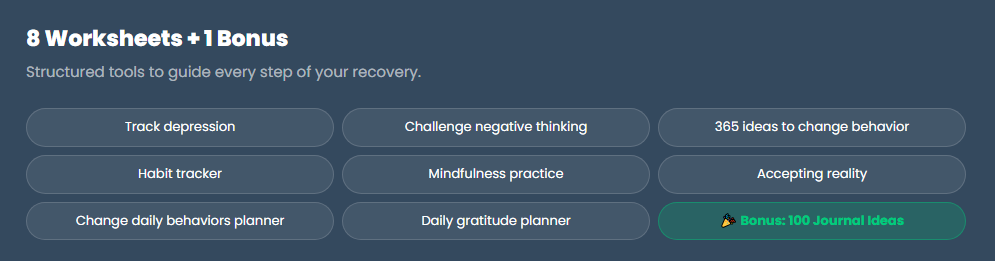
But a course with 13 videos and worksheets is not built for one dramatic montage. It is built for repetition. The official material points to exactly that: structured, self-paced learning rather than instant magic.
The truth is slower. Annoyingly slower. Progress may begin with smaller things than people want to brag about. A little more clarity. One less spiral. One better decision. Slightly less heaviness. Those aren’t sexy results, no. They are still results.
What actually works better: realistic expectations. A grounded Rise from depression Review should prepare people for method, not fireworks. Fireworks are pretty. They are also over in seconds and leave smoke behind.
7. “Self-guided means effortless”
No. Not even close.
A lot of buyers see “online course” and imagine ease. Watch a few videos, download a worksheet, absorb the wisdom through the pores like a cucumber mask for the soul. Lovely image. Not reality.
The official platform repeatedly calls Rise From Depression self-guided and highlights worksheets and lessons. That means effort. Follow-through. Repetition. Some days where you probably do not feel like doing any of it. That is not a flaw in the concept. That’s just how self-guided material works.
And honestly, some of the complaints people have with products like this are really complaints about effort. They want support without friction, relief without repetition, change without the dull middle. Very understandable. Also unrealistic, unfortunately.
What actually works better: treating the course like a tool instead of a charm. A real tool. One you use, not one you admire from a distance while waiting to feel transformed.
My blunt take on Rise from depression Review searches in the USA
If I strip away the glitter and the yelling, here’s where I land.
Based on the official pages, Rise From Depression appears to be a real self-guided course on Nathan Peterson’s platform, with evidence-based positioning, preview access, and a broader support ecosystem around it. That is the solid part.
The less glamorous part is that it still looks like a course. Which means it probably works best for people who are willing to engage with the lessons and worksheets instead of expecting instant emotional landscaping. It is not emergency care. It is not one-on-one therapy. It is not a mystical portal disguised as a buy button.
So when you read Rise from depression Review pages packed with giant phrases like “highly recommended,” “reliable,” “no scam,” and “100% legit,” don’t let adjectives do all the thinking for you. The official offer itself matters more than the screaming around it.
And the official offer looks coherent. Real. Structured. That’s worth more than inflated language.
Filter out the nonsense.
Ignore the fake tough-love crowd. Ignore the wellness parrots. Ignore the people who reduce depression to attitude, hydration, hustle, or a sunrise over Arizona. Ignore the reviews that sound like a product wedding speech. Ignore the reviews that sound like a courtroom opening statement. Both are usually performing, not helping.
Most bad advice spreads because it is simple, not because it is true.
The better stuff is usually slower. More structured. More repetitive. Less shiny. Sometimes kind of boring, and that’s okay. Boring can still help. Boring can still save somebody from wasting time and hope on glitter-coated rubbish.
So if you came here looking for a Rise from depression Review, the clean takeaway is this: the official course looks like a legitimate self-guided product with real structure, preview access, and a more believable setup than a lot of noisy internet fluff.
That doesn’t make it magic.
It just makes it worth judging like a real thing.
5 FAQs
1. Is Rise From Depression a real product?
Based on the official platform, yes. It is listed on Nathan Peterson’s OCD & Anxiety site as a self-guided depression course, with preview access and related support resources on the same platform.
2. What is included in the course?
The official pages describe it as a self-guided course with evidence-based strategies, and related site content references 13 self-paced videos and worksheets.
3. Is there a preview before buying?
Yes. The official platform uses “Try for free” and preview-style language around the course and related resource pages.
4. Who is this course likely best for in the USA?
Based on the official framing, it appears best suited to USA buyers who want flexible, private, home-based, self-guided support tools and are willing to engage with lessons and worksheets. This is an inference from how the course is described on the official platform.
5. Why do so many Rise from depression Review pages sound overhyped?
Because many review pages are designed to sell clicks or commissions, so they lean hard on phrases like “highly recommended,” “reliable,” and “100% legit.” The official course pages themselves are much more grounded and specific than that kind of hype language.
Table of Contents
7 Brutal Truths Hidden Inside Rise from depression Reviews That USA Buyers Should Read First